Ingen’s Disciples and Other Chinese Lineage Monks
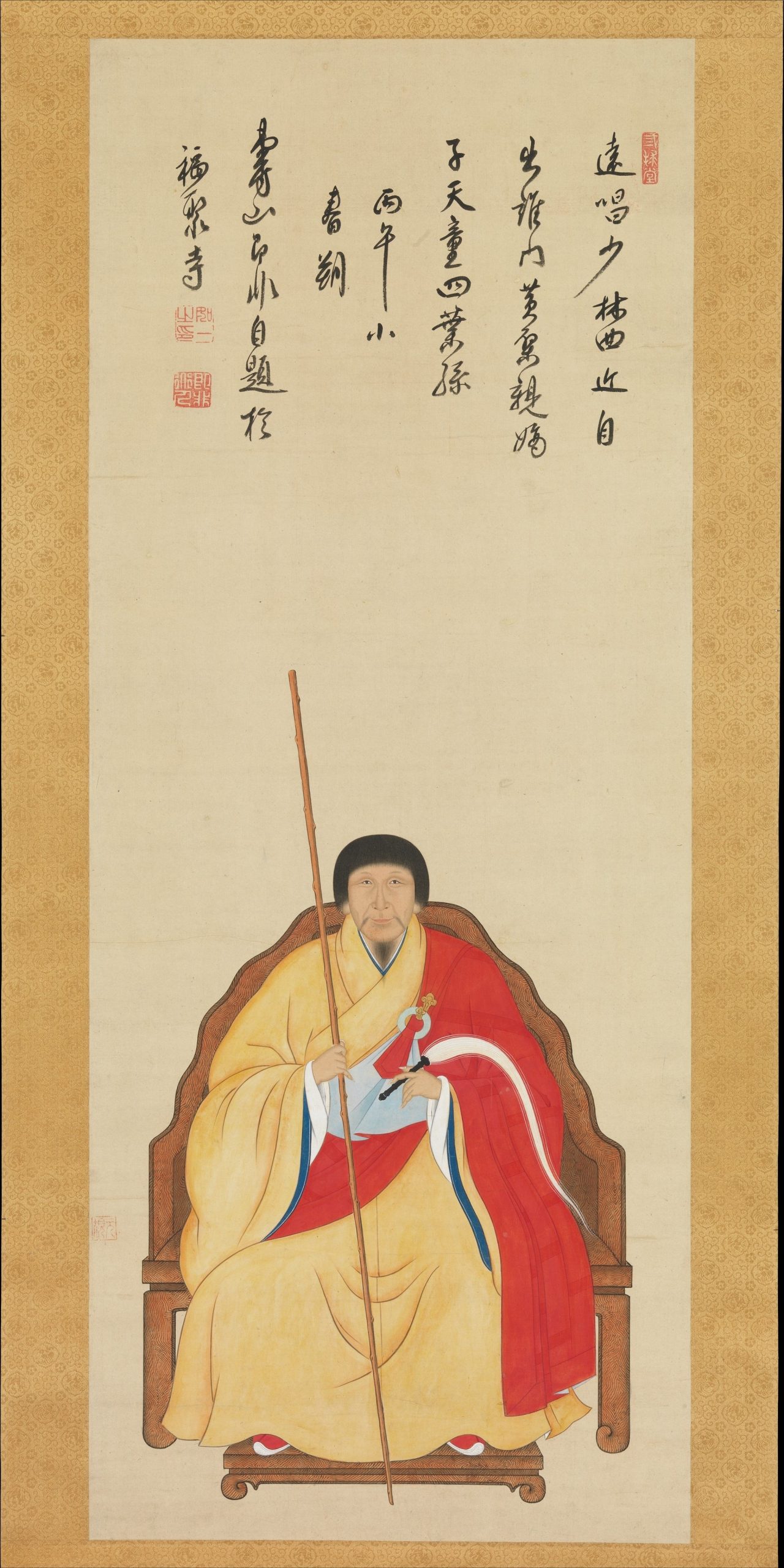
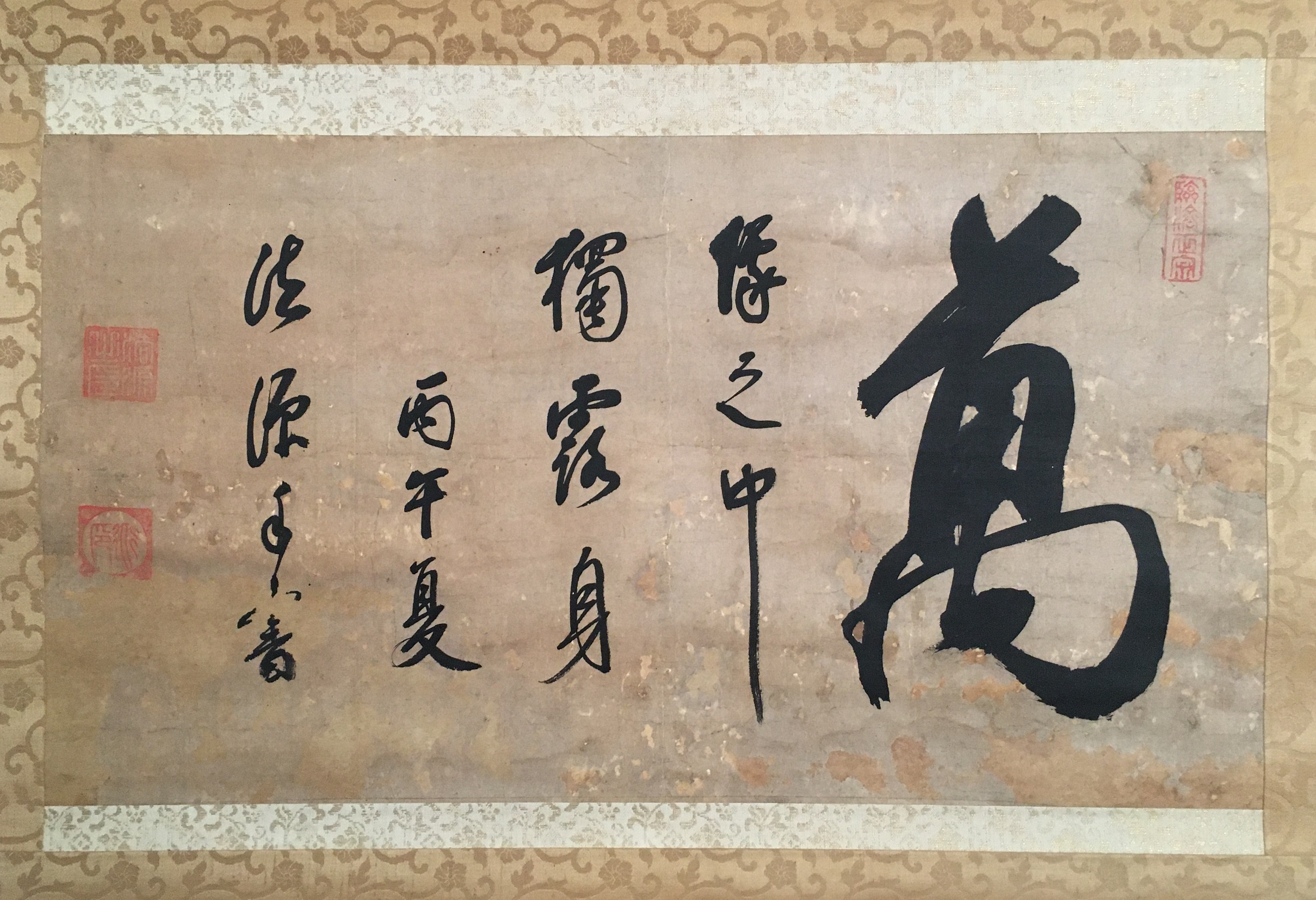
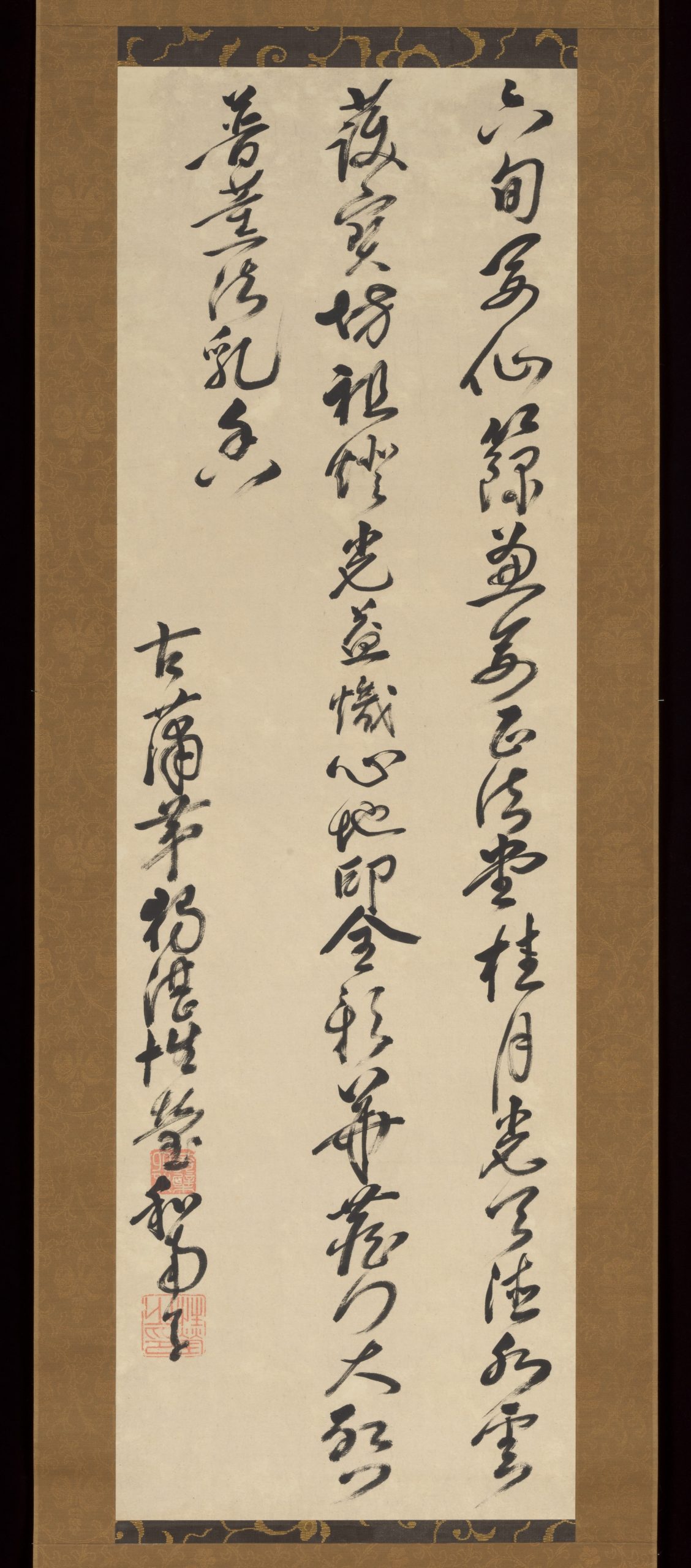
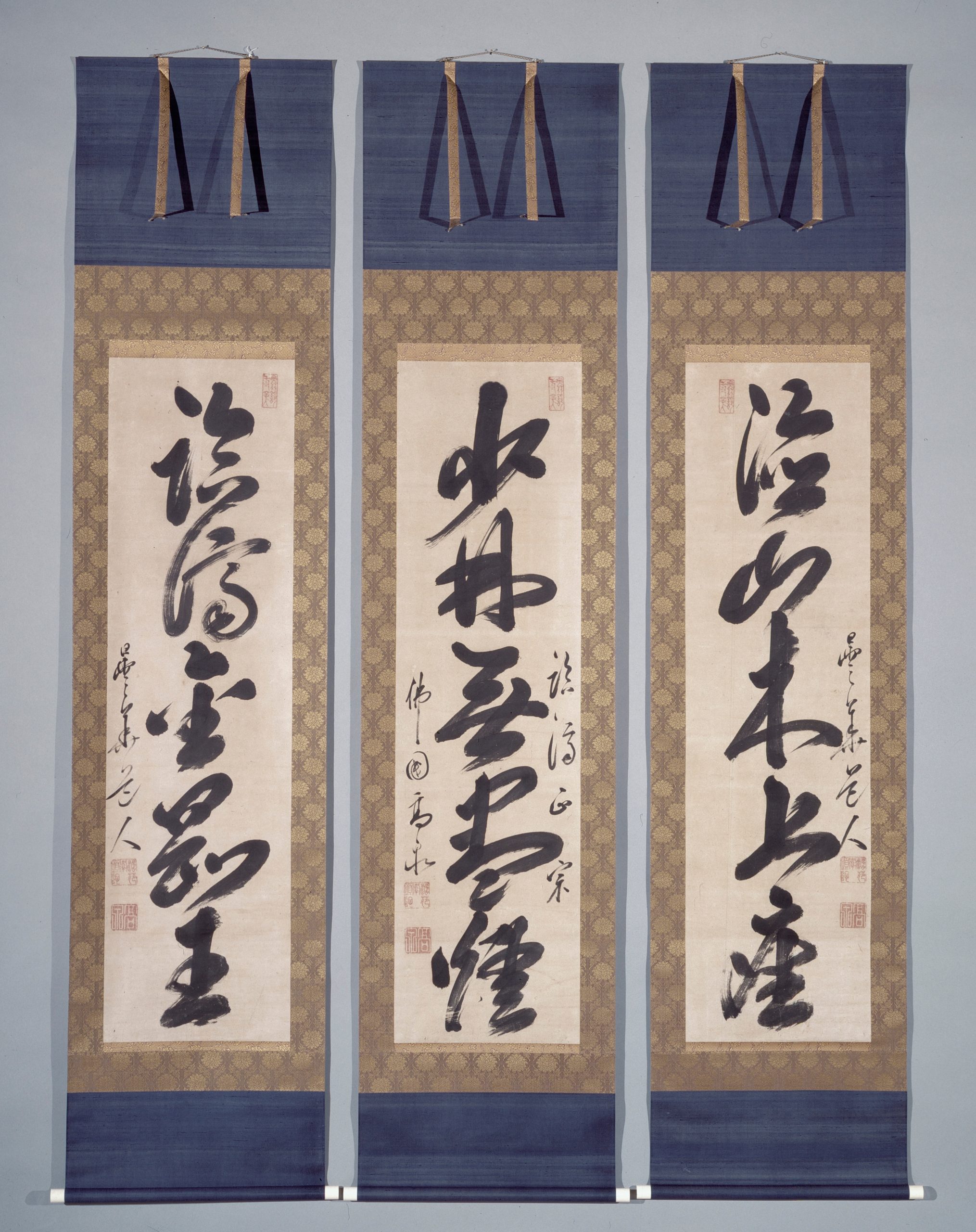
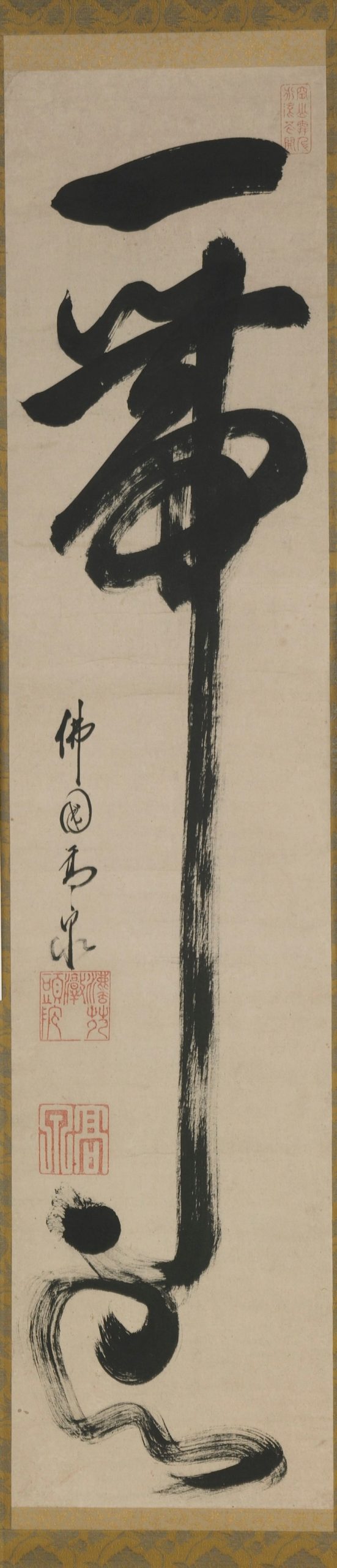
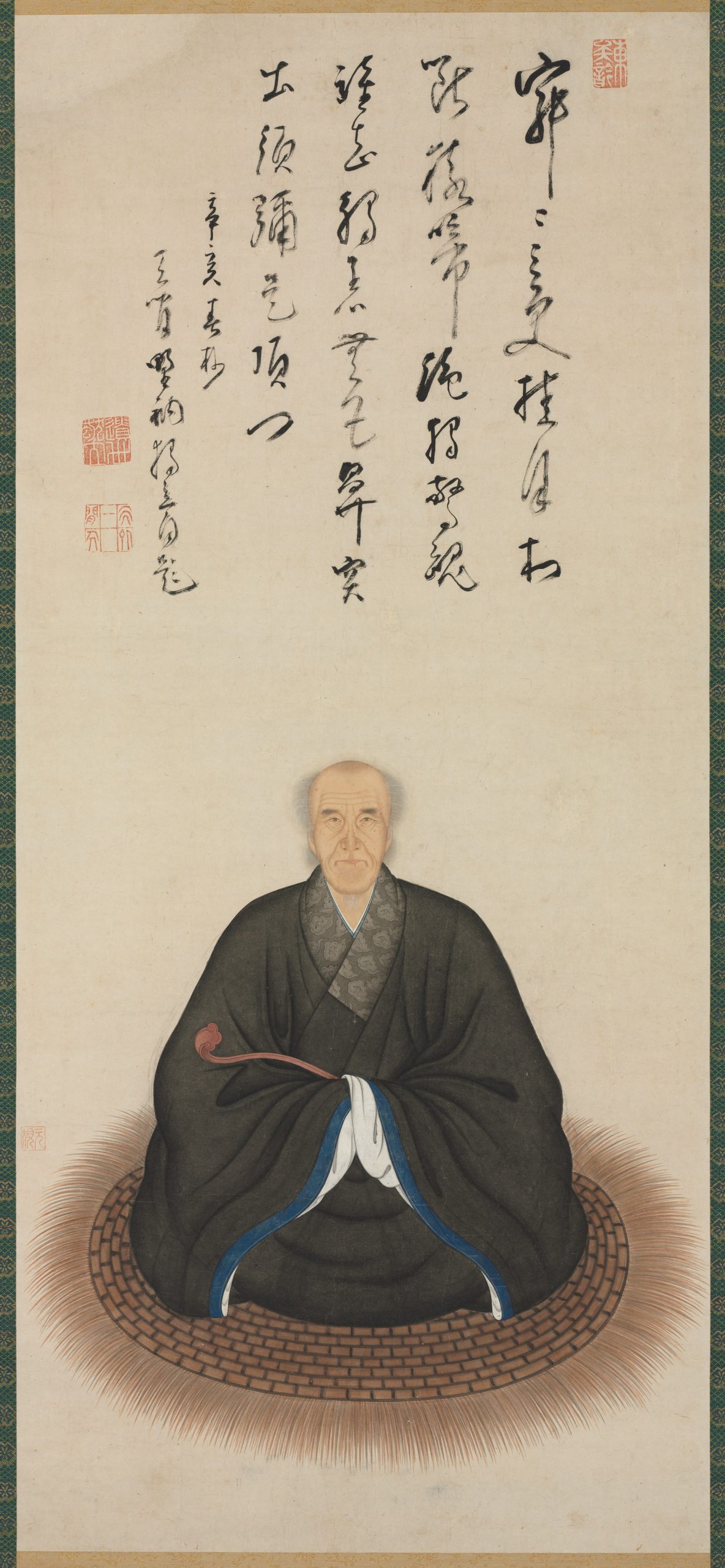
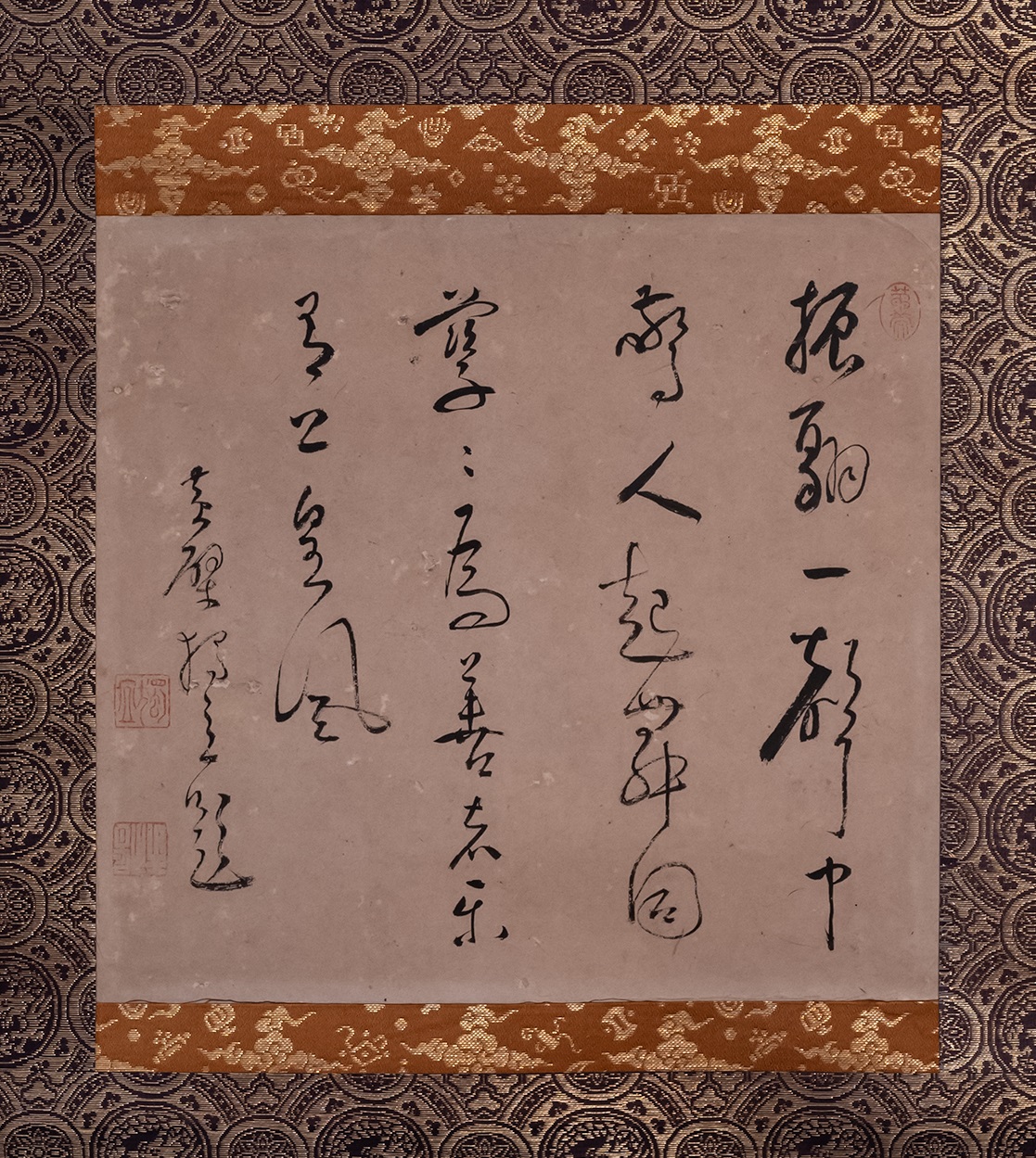
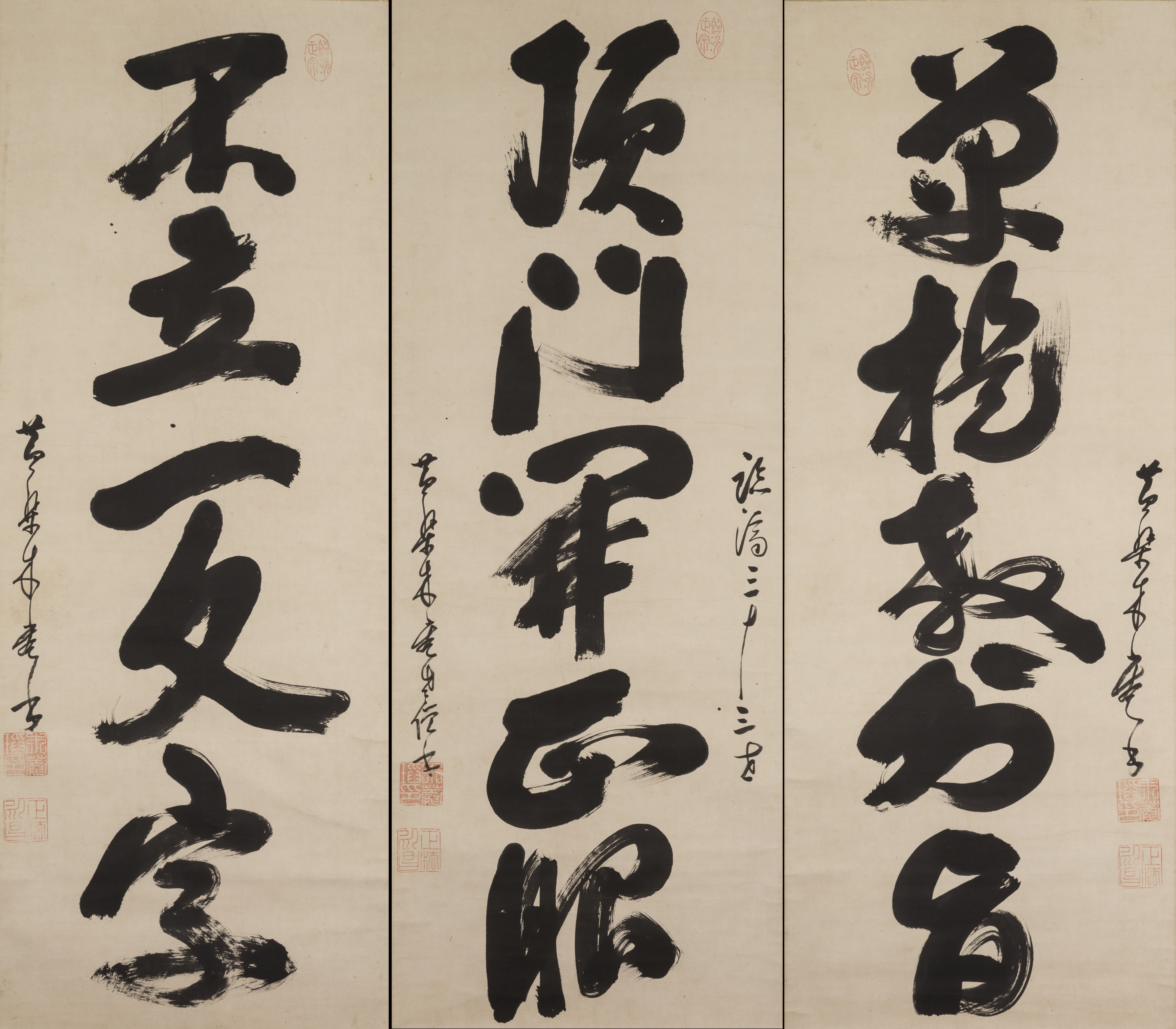
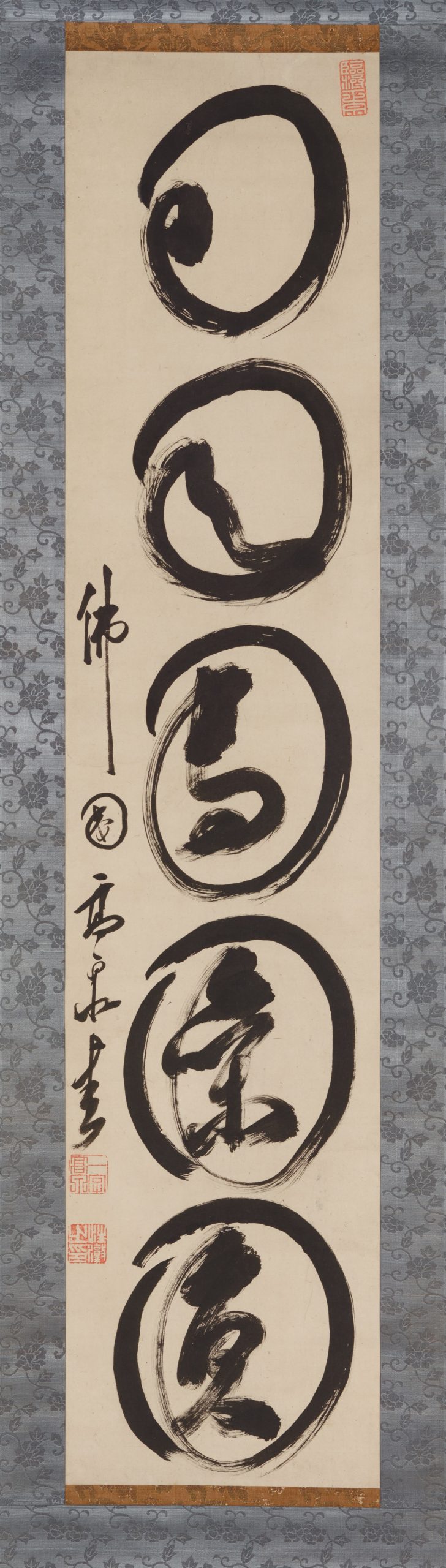
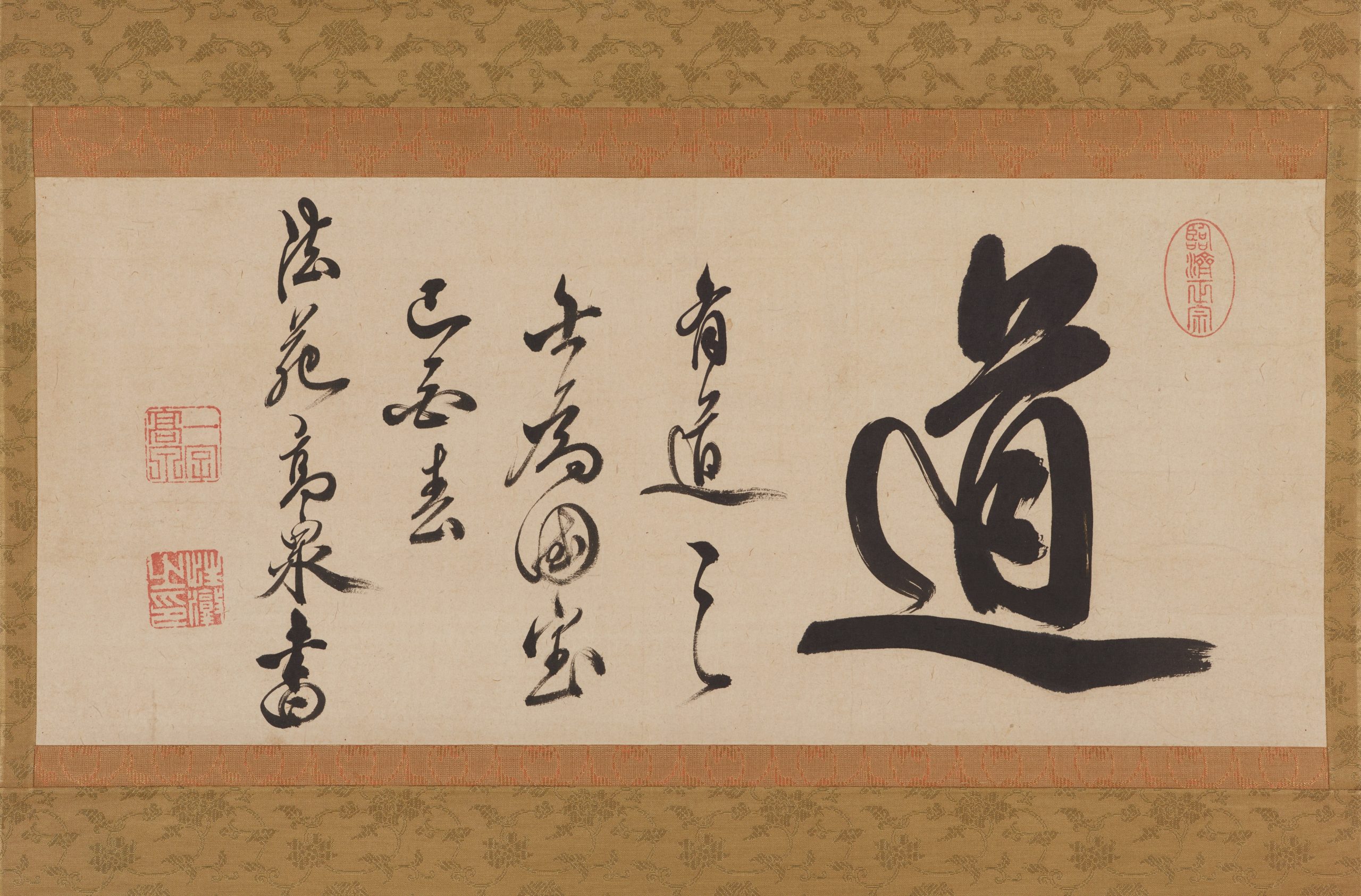
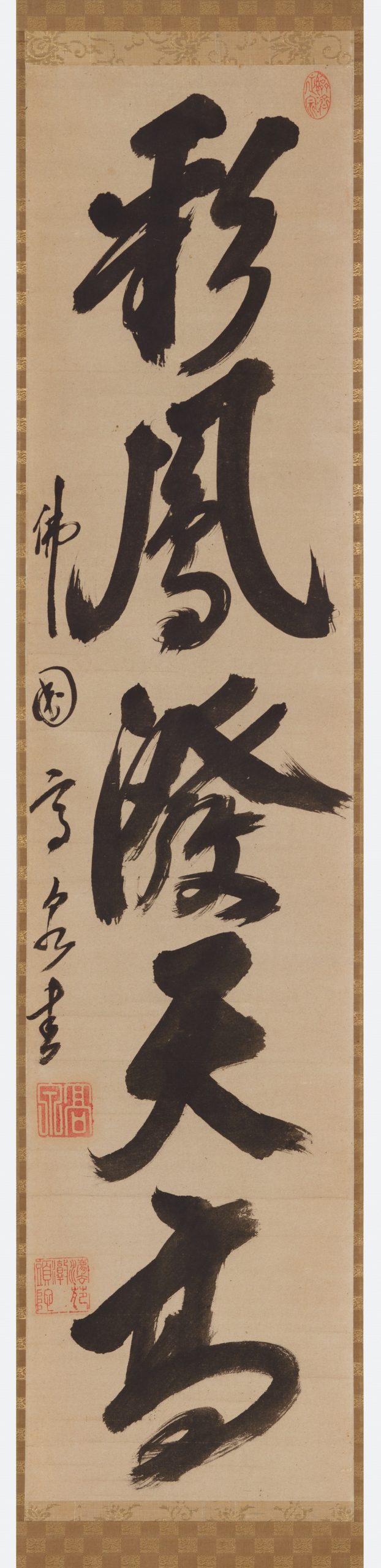
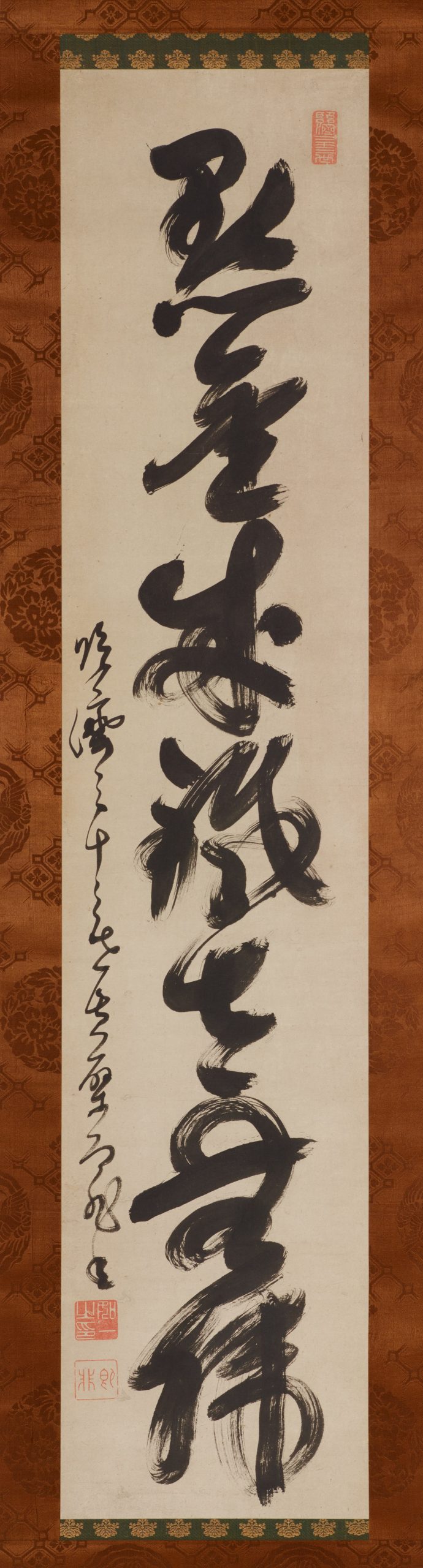
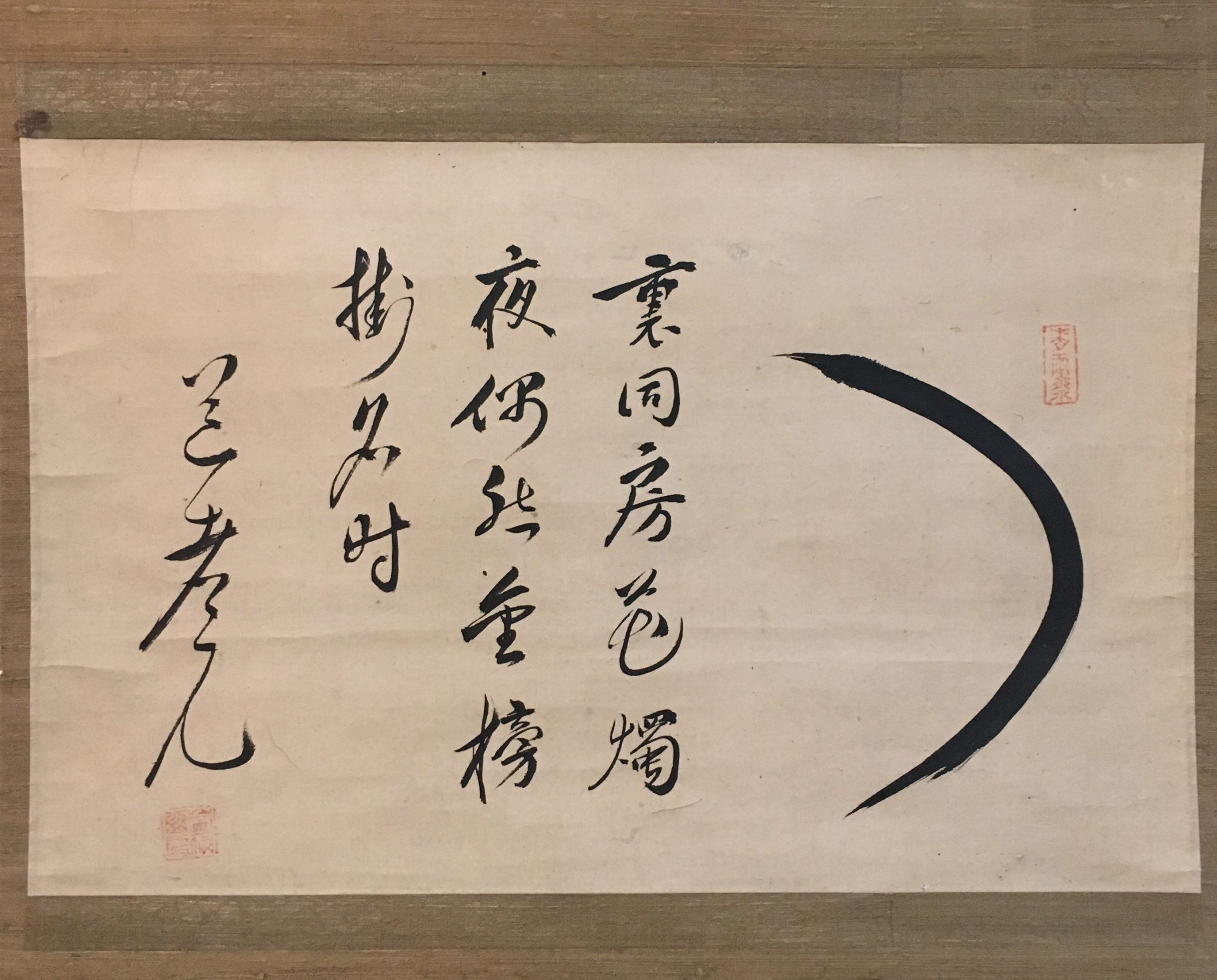
From the moment they arrived in Japan, the Chinese monks who would eventually establish the Ōbaku school of Zen were regarded as living embodiments of Chinese literati culture. Their portraits and works of calligraphy manifest this charisma and were highly esteemed.
In Ōbaku, as in all Zen traditions, the abbot played a pivotal role in the ritual life of the monastery. Works of calligraphy by the early abbots—often brushed in large powerful strokes and carved into wood to adorn building entrances and gateways, or displayed in scroll format for private interior spaces—enliven the temple grounds. These calligraphic displays throughout the monastery continue to evoke the enduring presence and exuberant spirit of the early Ōbaku leaders.
In traditional portraits of Zen abbots, the disciple commissioning the portrait often asks the abbot being portrayed to add the inscription. In these cases, we use the term “self-eulogy.” Eminent Ōbaku abbots are also often asked to brush eulogies on portraits of other figures, including legendary ancestors, monks, and the laity. Eulogies often make light of the portrait-making process, at times mocking the attempt to capture the likeness of a real person as futile, as Buddhist metaphysical truths are evoked.
This room features important early Ōbaku monks and other major figures with whom they interacted: the second (Mokuan) and fourth (Dokutan) abbots of Manpukuji, who were Ingen’s Dharma heirs; the fifth Manpukuji abbot Kōsen who was the Dharma heir of Ingen’s successor at Wanfusi in China; Sokuhi, also Ingen’s Dharma heir, who gained renown as a Zen teacher and calligrapher, and sojourned as abbot at Ōbaku temples in Nagasaki and in Kokura (Fukuoka prefecture); and Dokuryū, who became a monk under Ingen but never received dharma transmission. The latter served Ingen as scribe and gained renown as a physician and a master of the arts of calligraphy and seal carving.
Other Zen monks featured in this room include the Japanese master Bankei and his émigré Chinese teacher Daozhe who was not in Ingen’s lineage, and the Japanese monk Hōgen, an imperial prince who first trained under Mokuan and then with Dokutan, from whom he received Dharma transmission.
Please visit Room 3, Artists and Poets, for works of calligraphy and painting by monks and artists in the cultural sphere of Ōbaku Zen.