Traces of Huangbo/Ōbaku Temples
Prior to Ingen’s arrival, Chinese residents in Nagasaki in the 1620s had erected three modest temples, each of which served as places of worship and community centers for residents from different regions of China, although they allowed Japanese to worship at them as well. Yet, it was not until the sudden influx of Chinese artisans and monks who accompanied Ingen to Japan in 1654, and the beginning of the construction of the head temple Manpukuji in 1661 near the great urban centers of Kyoto and Osaka, that Ōbaku temple architecture rose to prominence. Manpukuji attracted Japanese from far and wide, including Zen monks of other sects, Confucian scholars, and artists, all of whom were eager to experience or capture its exciting ambiance, and to encounter the venerable Ingen in person. The construction of Manpukuji also greatly spurred innovations to Japanese temple design. By 1745, over 1,000 Ōbaku temples flourishing throughout Japan reflected the legacy of Ōbaku.
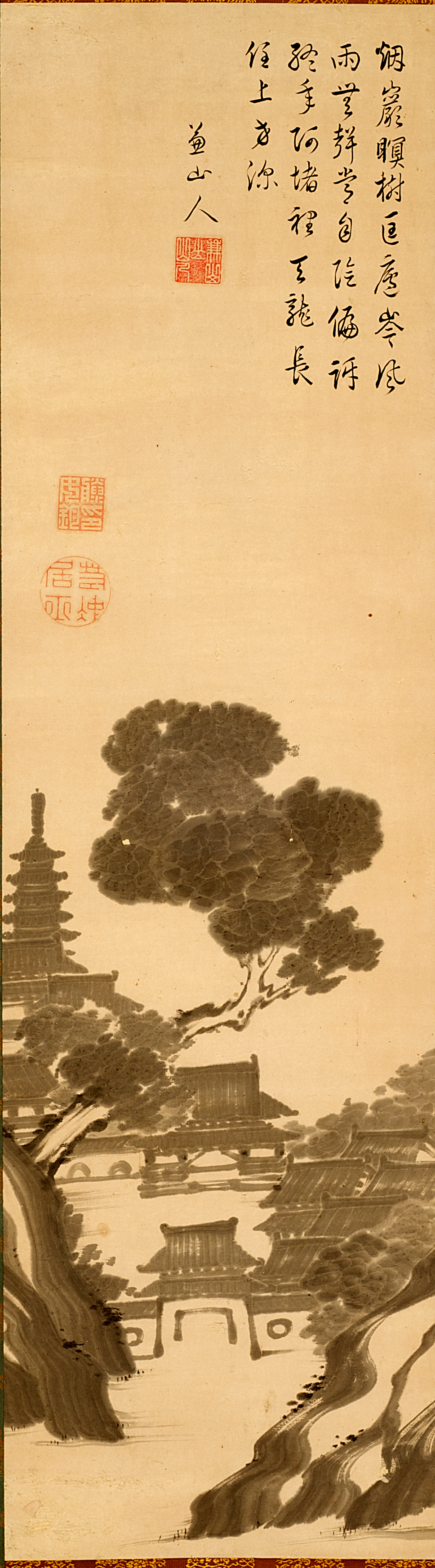
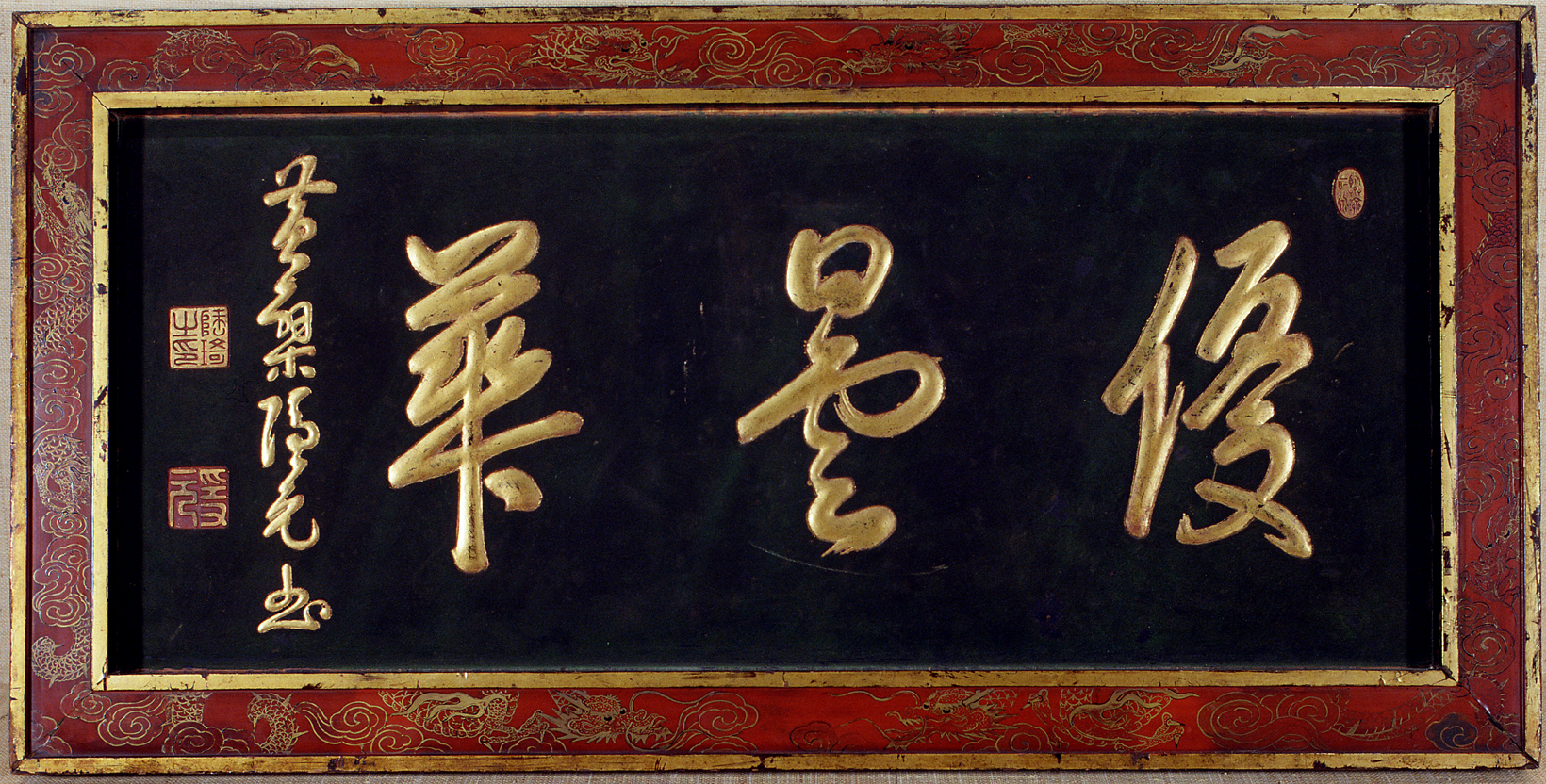
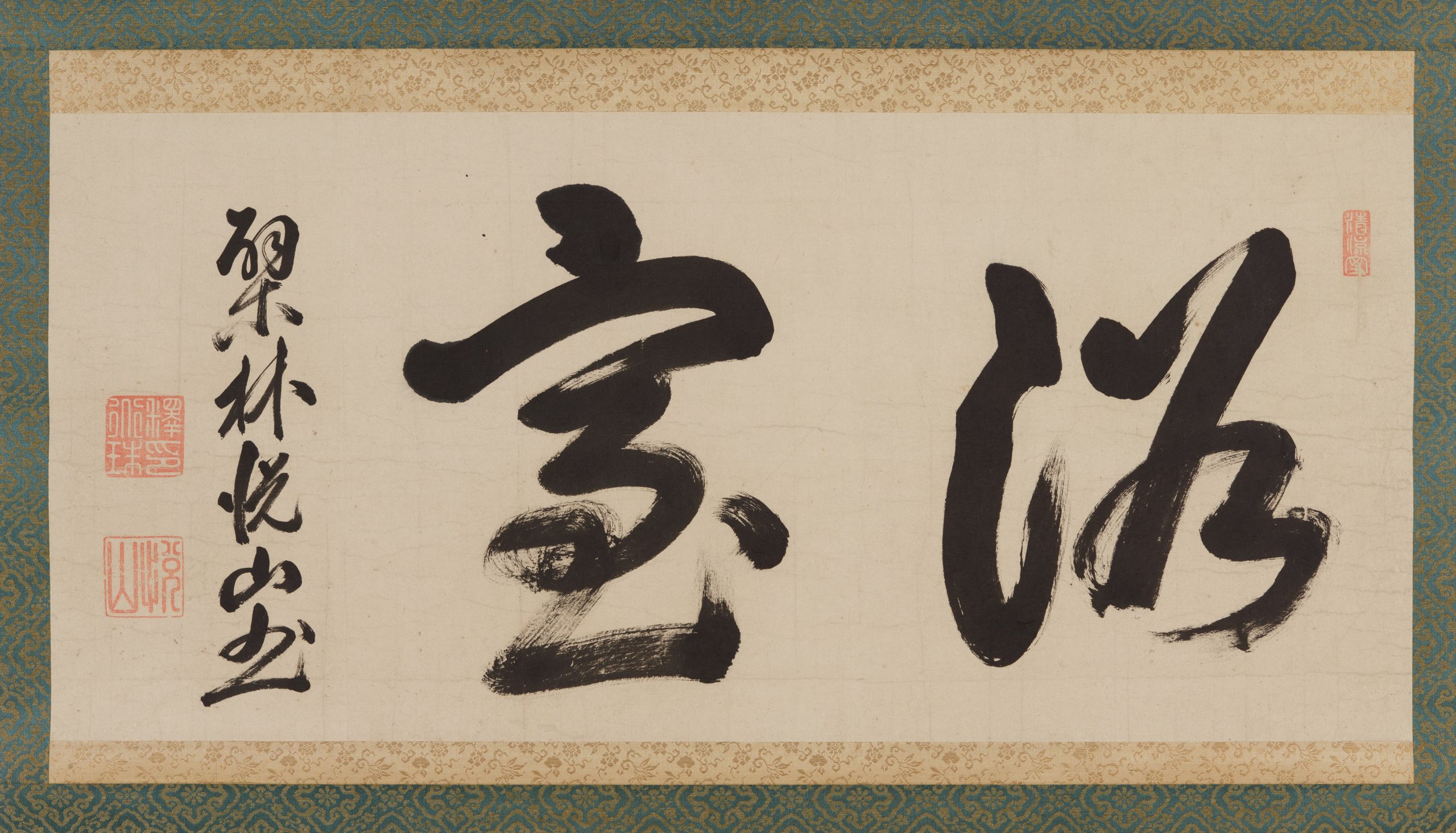
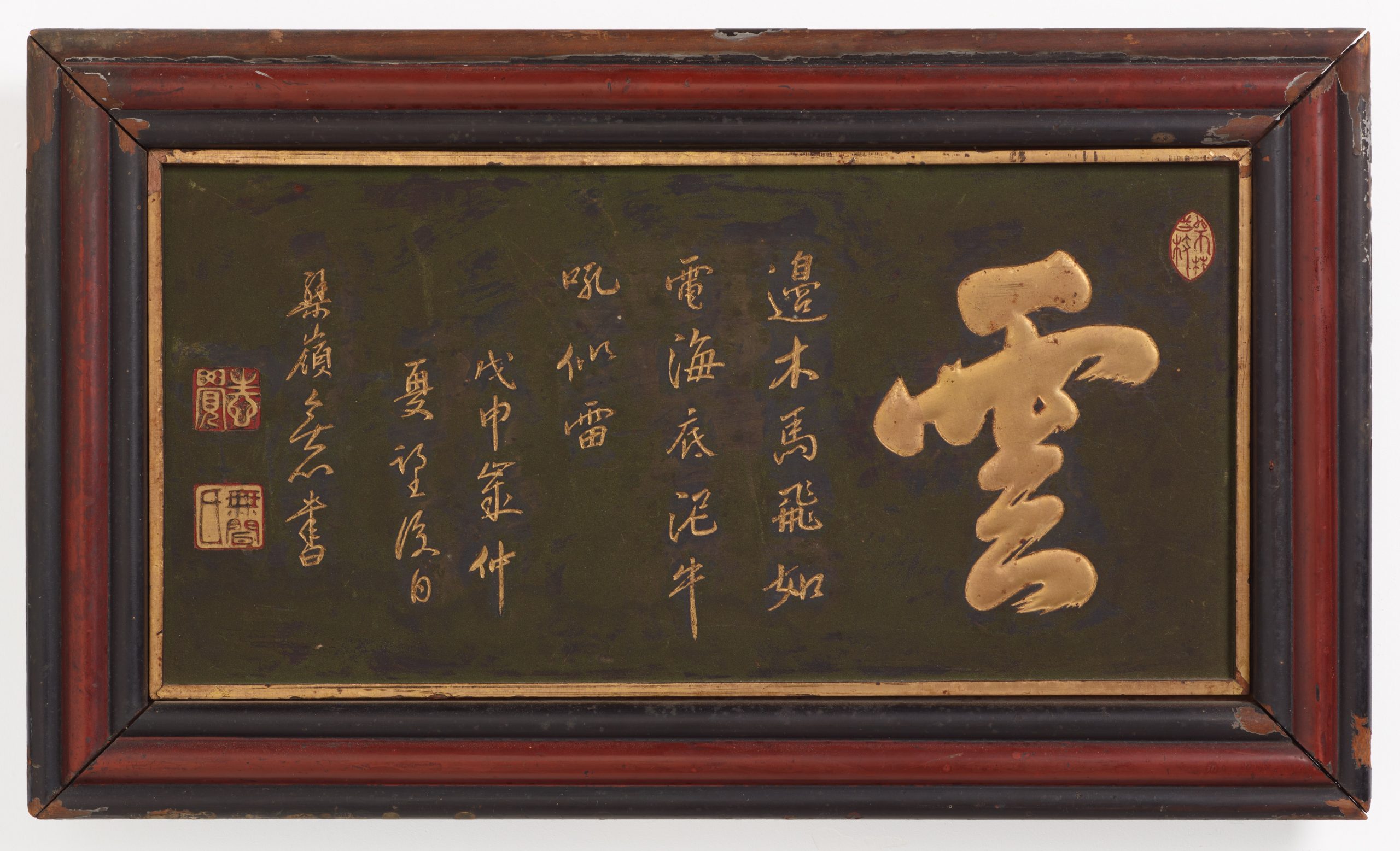
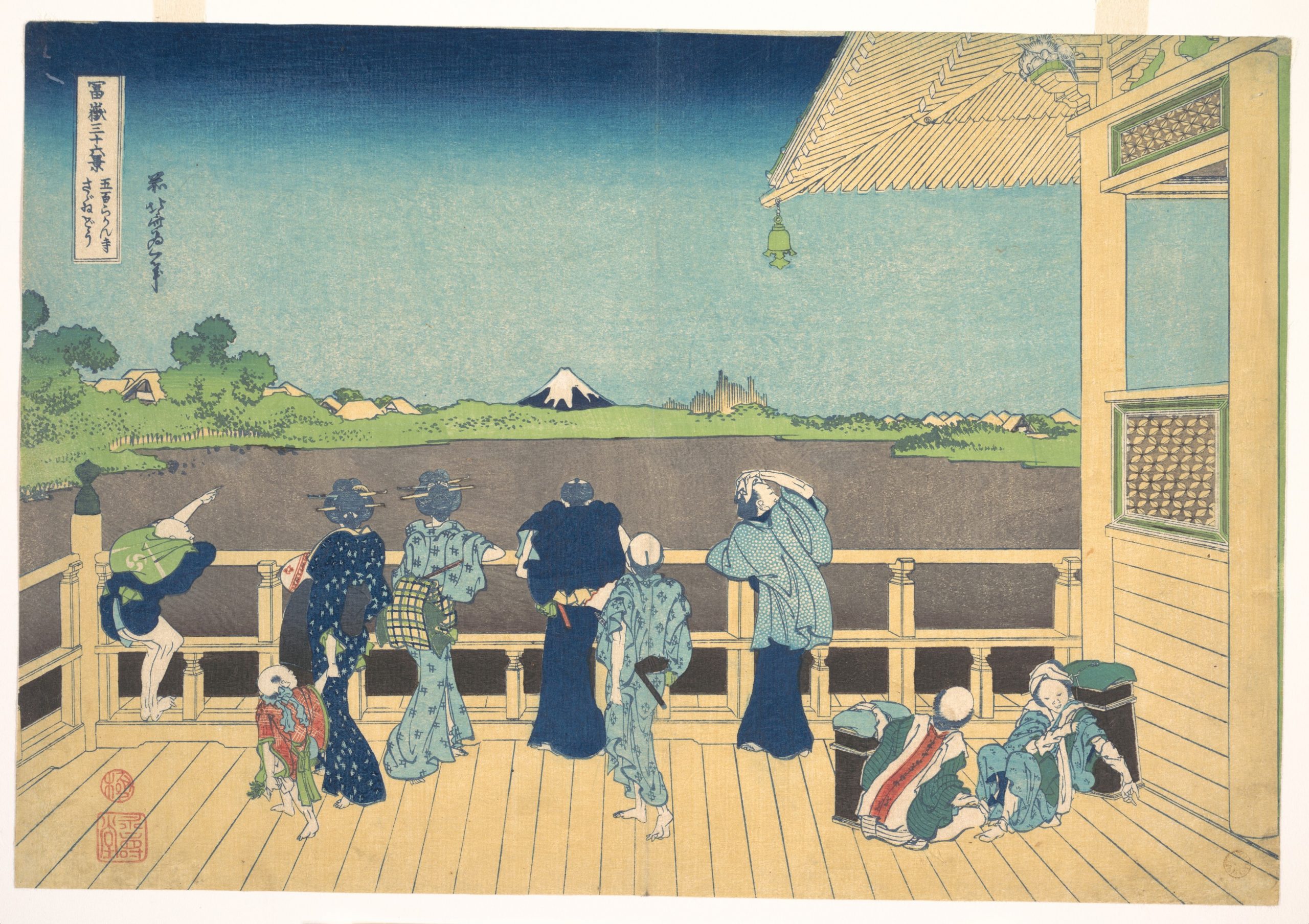
The architectural features and design elements of Ōbaku temples are evident in pictorial representations of them and in elements of their buildings that have been removed from their original context. This exhibition room features wooden signboards (gaku) designed to hang above gateways and doorways. Prominent Ōbaku monks brushed calligraphic templates for these boards. Although we cannot know precisely when or why their removal occurred, it is most likely because temples had either changed sectarian affiliations or were closed in the late 19th century, when parishioners declined in numbers and temples faced difficult times. Here, we also include a rare example of a calligraphy scroll created as a template for one of these signboards. The pictorial representation of Ōbaku temples has retained its appeal into modern times, especially in works by artists who feature famous sites in Japan, a subject with a long and enjoyable history in Japanese art.